


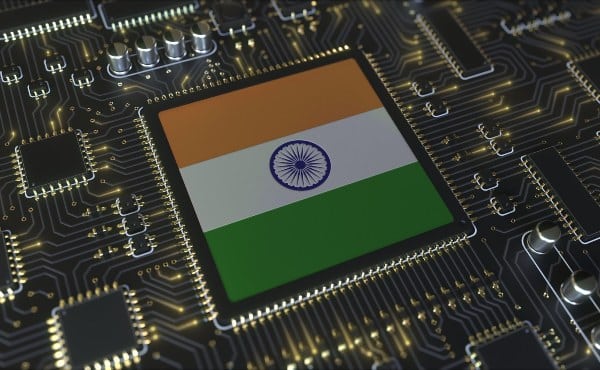
India is making a decisive push in semiconductor design and manufacturing, setting its sights on 2 nanometre (nm) chip technology. On September 16, Union Minister Shri Ashwini Vaishnaw inaugurated ARM’s new semiconductor design office in Bengaluru, a milestone in India’s journey from 7 nm to 2 nm chip designs, according to the Press Information Bureau (PIB).
Semiconductors, often called the “brains” of modern electronics, enable devices from smartphones to satellites to store, process, and transfer information. Smaller transistors allow chips to pack more computing power in less space, improving efficiency, reducing energy consumption, and supporting advanced applications such as artificial intelligence, mobile computing, defence systems, and space exploration. The upcoming 2 nm chips mark the first such design effort in India.
The India Semiconductor Mission (ISM) has approved ten projects across six states, representing cumulative investments of ₹1.6 lakh crore. With an outlay of ₹76,000 crore, ISM aims to strengthen the domestic ecosystem. Earlier this year, Vaishnaw inaugurated India’s first 3 nm design facilities in Noida and Bengaluru, setting the stage for next-generation chips. Electronics manufacturing in India has grown six-fold in the past eleven years, fueling rising semiconductor demand.
Startups are accelerating chip design under the Design Linked Incentive (DLI) Scheme, with 23 projects sanctioned and 72 companies using advanced tools. Student-led innovation is also rising, with 28 chips taped out by teams from 25 institutions. Overall, 278 universities and research institutes contribute to building a skilled semiconductor workforce.
Globally, the semiconductor industry is projected to reach USD 1 trillion by 2030, with India’s domestic market expected to touch USD 100–110 billion. While Taiwan, South Korea, Japan, China, and the U.S. dominate manufacturing—with Taiwan producing over 60% of global chips and nearly 90% of advanced nodes—India is emerging as a reliable partner to diversify supply chains. The Covid-19 chip shortage prompted India to move from assembly and packaging toward full-scale design and manufacturing, aiming for a complete domestic ecosystem within four years.
The 2 nm milestone reflects India’s strategic push toward self-reliance and global competitiveness in advanced semiconductor technology. According to PIB, the country is transitioning from device assembly to producing world-class chips, reinforcing its Atmanirbhar Bharat vision and positioning India as an emerging leader in the global semiconductor industry.
As India advances its semiconductor capabilities, the combination of government support, startup innovation, academic engagement, and global partnerships is expected to drive the nation’s emergence as a hub for advanced chip design and manufacturing.