


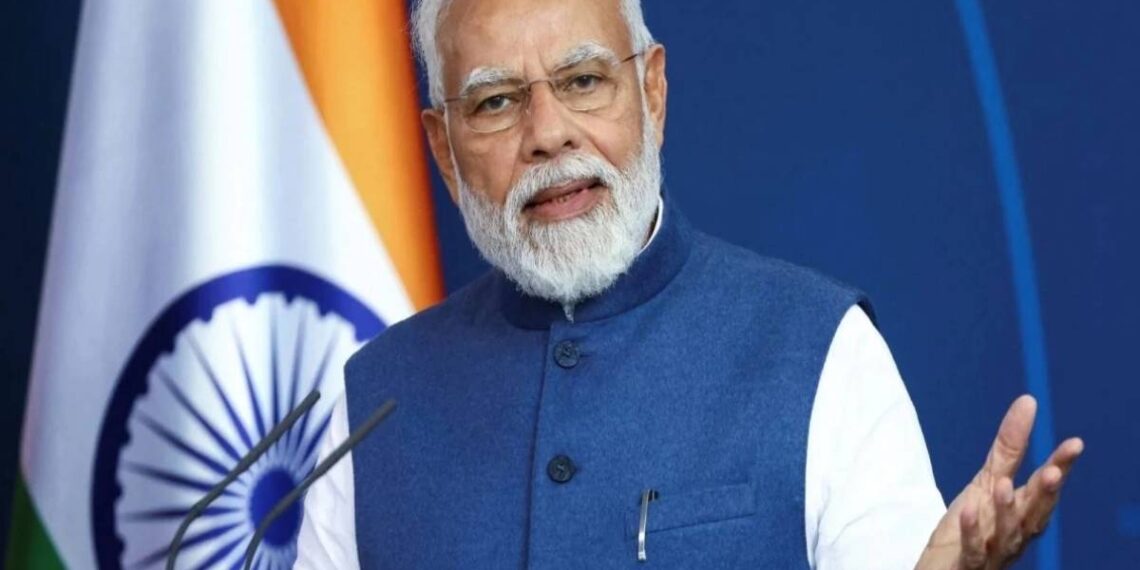
Indian Prime Minister Narendra Modi on Sunday inaugurated a bamboo-based bioethanol plant and laid the foundation stone for a polypropylene unit at Numaligarh Refinery Limited (NRL) in Assam, positioning the state as an emerging node in India’s ambitions to scale up its semiconductor and electronics ecosystem.
The announcements come against the backdrop of a ₹27,000 crore semiconductor plant under construction in Morigaon, Assam, part of the India Semiconductor Mission aimed at creating a domestic chip-making capability. Modi tied the projects together, portraying them as interconnected steps in building a supply chain where energy resources, petrochemicals, and advanced electronics reinforce each other.
“From bank cards and mobile phones to cars, aircraft, and space missions, the core of every electronic device lies in a small chip,” Modi said. “If India wants to manufacture these products on its own, it must also create its own semiconductor capacity.”
The polypropylene unit reflects this logic. Polypropylene is a versatile petrochemical critical for multiple industries, including electronics. Its applications range from insulating cables and producing capacitors to creating durable casings and lightweight plastic components for consumer devices. By manufacturing polypropylene domestically, India aims to secure one of the essential building blocks in electronics production. Modi stressed its importance, saying, “It is hard to imagine life without polypropylene,” pointing to its role across fibers, packaging, medical kits, and industrial applications.
For the electronics industry, the unit could reduce input costs and minimize reliance on imports, a key barrier for India’s competitiveness in assembling and manufacturing devices at scale. Analysts say local availability of polypropylene strengthens the upstream end of the electronics value chain, complementing downstream initiatives in semiconductor manufacturing and electronics assembly.
The bioethanol plant, though primarily framed as a renewable energy initiative, also intersects with the electronics agenda by signaling India’s commitment to sustainable manufacturing practices. Multinationals sourcing from India are under increasing pressure to align with ESG goals, and a green energy base supports the credibility of India’s electronics exports. The plant leverages Assam’s abundant bamboo cultivation, creating a renewable fuel source that can feed into both energy security and cleaner industrial operations.
India’s broader challenge is its heavy reliance on imported chips and electronic components, which exposes its manufacturing sector to global supply chain disruptions. Pandemic-era shortages underscored this vulnerability, prompting governments worldwide to invest heavily in local chip ecosystems. While the U.S. CHIPS Act and Europe’s semiconductor initiatives dominate headlines, India is carving out its own approach by combining traditional strengths—such as a deep IT talent pool and cost advantages—with targeted industrial projects in regions like Assam.
The Morigaon semiconductor facility is central to this push. Once completed, it could help India reduce its dependence on imported semiconductors, a bottleneck that has constrained the growth of its electronics and automotive sectors. Together with polypropylene production, it signals an attempt to create a more vertically integrated electronics supply chain within India.
The decision to anchor these initiatives in Assam is also strategically significant. Historically known for tea, silk, and handicrafts, Assam has had limited participation in India’s high-tech industries. By establishing petrochemical and semiconductor capacities in the region, the government is not only diversifying industrial geography but also weaving the northeast into the national and global technology map.
International observers view this as part of a wider repositioning of India in global electronics. With demand for chips and electronic devices projected to surge worldwide, India’s ability to offer both cost-efficient manufacturing and secure access to inputs like polypropylene could make it a credible alternative hub. Still, execution risks remain high. Scaling semiconductor production requires complex supply chains, global partnerships, and long-term investment commitments.
Modi sought to balance ambition with symbolism, framing Assam as both a custodian of heritage and a frontier of modern industry. “Assam is not only strengthening India’s energy capabilities but also laying the foundation for the industries of the future,” he said.
For the global electronics sector, the developments point to India’s intent to move beyond its role as a consumer and assembler of devices to becoming a full-fledged player in the upstream ecosystem. If successful, Assam’s transformation could mark an inflection point in India’s journey from “Make in India” to “Engineered with Intelligence in India.”