


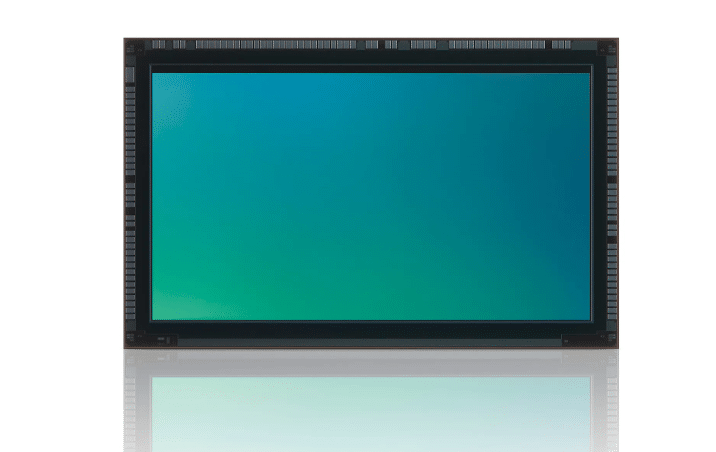
Sony Corporation has unveiled the IMX828, the industry’s first image sensor equipped with a built-in MIPI A-PHY interface, designed to meet the high-bandwidth, low-latency, and highly reliable communication requirements of advanced automotive camera systems. The sensor integrates Sony’s proprietary error handling circuit, improving resistance to data transmission errors caused by external noise and enhancing reliability for vehicle perception applications.
By embedding the MIPI A-PHY interface directly into the sensor, the IMX828 eliminates the need for an externally mounted serializer chip, a component previously essential for high-speed camera communications. This integration allows for a more compact camera module design, reduced heat generation, and lower overall power consumption. These advantages are expected to help automotive OEMs and Tier 1 suppliers streamline their designs and reduce production costs while improving system performance.
In addition to the high-speed interface, the IMX828 offers a low-power parking surveillance function. In this optional mode, the sensor continuously monitors the environment while the vehicle is parked, capturing images at low resolution and frame rates to keep power consumption below 100 milliwatts. When motion is detected, the sensor notifies the vehicle’s electronic control unit (ECU) and automatically switches to normal imaging mode, enabling responsive monitoring with minimal energy use.
Sony has also enhanced recognition performance with its proprietary pixel structure, which delivers the industry’s highest high dynamic range (HDR) levels at 47 Kcd/m². The sensor achieves a maximum HDR of 150 decibels, maintaining stable color reproduction for high-luminance objects such as red traffic signals and LED taillights even in bright daylight. This ensures consistent image quality while reducing the risk of false object recognition, which is crucial for advanced driver-assistance systems (ADAS) and autonomous driving applications.
To further improve performance in challenging lighting conditions, Sony has developed a dual-HDR capture mode in collaboration with Mobileye. This mode continuously captures two HDR images with differing exposure settings, improving low-light visibility and reducing motion blur from moving subjects. By combining these images, the sensor enhances computer vision performance for vehicle cameras, supporting safer and more reliable perception systems in real-world driving environments.
Sony has designed the IMX828 to meet stringent automotive reliability standards. The sensor is planned to undergo AEC-Q100 Grade 2 testing before mass production and complies with ISO 26262 functional safety requirements, achieving hardware metrics at ASIL-B and development processes at ASIL-D. Additionally, the sensor can optionally meet advanced automotive cybersecurity requirements under the ISO/SAE 21434 standard. These features include CMOS image sensor authentication, image tampering detection, and secure communication protocols to prevent data manipulation, ensuring that both hardware and software maintain integrity in automotive applications.
The combination of high-speed MIPI A-PHY connectivity, dual-HDR imaging, advanced HDR performance, low-power surveillance, and rigorous safety and security compliance positions the IMX828 as a leading solution for next-generation vehicle cameras. By integrating these capabilities directly into the image sensor, Sony offers automotive manufacturers a simplified, reliable, and efficient platform that addresses both performance and safety requirements.
Industry analysts suggest that the IMX828 could accelerate the adoption of high-performance camera systems in vehicles, supporting the broader shift toward autonomous and semi-autonomous driving. With rising demand for compact, energy-efficient, and highly reliable camera modules, the IMX828’s integrated approach is expected to set a new standard for automotive imaging technology. OEMs and Tier 1 partners now have access to a sensor that not only simplifies system architecture but also enhances perception, safety, and cybersecurity for modern vehicles.