

Japanese technology and materials company Asahi Kasei Corp. has licensed its acetonitrile-based electrolyte technology to Germany’s EAS Batteries GmbH for use in a new generation of ultra-high power lithium-ion battery cells. The agreement marks a strategic step in Asahi Kasei’s efforts to commercialize its proprietary electrolyte platform and expand its footprint in the fast-growing global energy storage market.
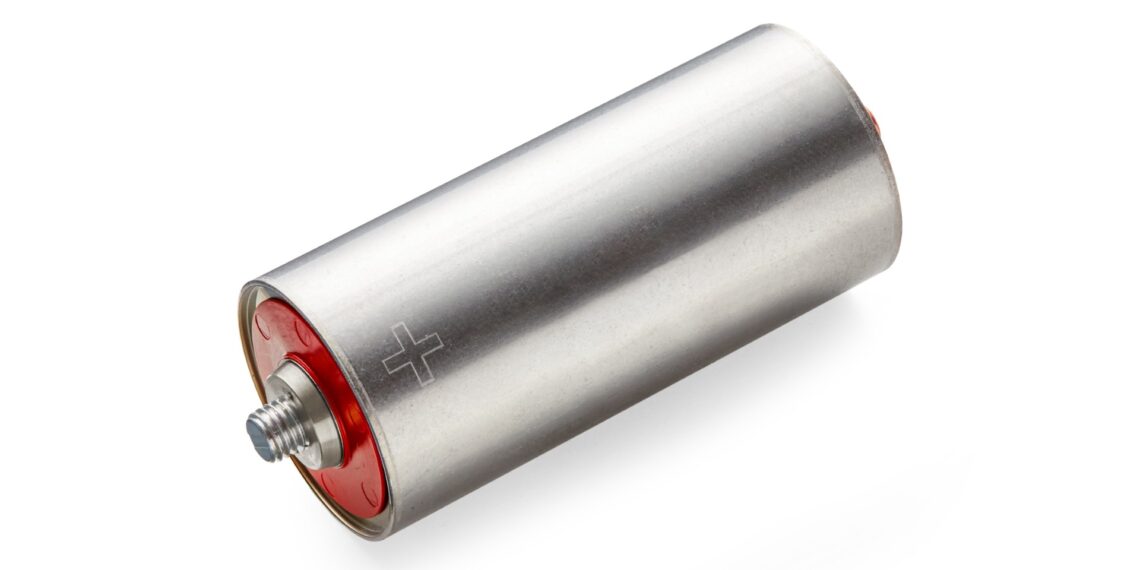
EAS Batteries will integrate the advanced electrolyte into its newly developed UHP601300 LFP 22 cylindrical cell, which features a lithium iron phosphate (LFP) cathode. The electrolyte’s high ionic conductivity reduces internal resistance and enables faster charge-discharge cycles, higher power output, and stable performance across extreme temperature ranges. The new cell, which targets industrial and mobility applications, is expected to launch commercially by March 2026, in line with Asahi Kasei’s broader technology commercialization plan.
The development of the UHP601300 LFP 22 cell is part of a collaborative effort between Asahi Kasei and EAS Batteries under the German government-backed “HEADLINE” project, supported by the Federal Ministry of Research, Technology, and Space. The initiative focuses on advancing next-generation energy storage systems for demanding sectors such as marine, railway, construction machinery, and aerospace, where reliability, durability, and energy efficiency are paramount.
Asahi Kasei’s electrolyte technology is the product of more than three decades of lithium-ion research, including pioneering work by Nobel laureate Akira Yoshino, Honorary Fellow at the company and one of the inventors of the lithium-ion battery. Building on its deep R&D expertise, Asahi Kasei began exploring high ionic conductive electrolytes in 2010, identifying acetonitrile as a critical component capable of enhancing ion transport. In June 2024, the company achieved proof of concept for its acetonitrile-based electrolyte, demonstrating its ability to deliver superior power output at low temperatures and improved durability under high thermal stress.
Performance testing of the new UHP601300 LFP 22 cell has shown striking results. The cell achieves a specific power of 2,550 W/kg under continuous discharge—approximately 60% higher than comparable cells using conventional electrolytes—and a pulse discharge power of 3,760 W/kg over two seconds, a 10% improvement. It also demonstrates an extended cycle life of 2,400 full charge-discharge cycles at 5C/5C (100% depth of discharge) before reaching 80% capacity retention. This translates to faster charge times, lower heat generation, and improved energy efficiency—key parameters for industrial and transport applications that demand sustained high power.
Comparative test data further highlight the electrolyte’s advantages. Under continuous discharge, the new cell achieved 2,550 W/kg at 880 A (40C), versus 1,550 W/kg at 550 A (25C) for cells with standard electrolytes. For two-second pulse discharges, it recorded 3,760 W/kg at 1,320 A (60C) compared to 3,420 W/kg for conventional alternatives. The results underline Asahi Kasei’s progress in developing an electrolyte chemistry that balances power density, stability, and efficiency.
Michael Deutmeyer, Managing Director of EAS Batteries GmbH, described the partnership as a pivotal moment for the company’s next phase of growth. “Our collaboration with Asahi Kasei sets a strong foundation for advancing cell quality and performance, especially for high-power applications,” he said. “The robustness of the electrolyte is key—not only for EAS products but also for scaling our technology across markets. Strategic partnerships like this enable tailored solutions for future demands.”
Osamu Matsuzaki, Senior Executive Officer of Asahi Kasei and Head of Corporate R&D and IP, said the electrolyte marks a technological leap in battery chemistry. “By combining our high ionic conductivity electrolyte with EAS’s cell expertise, we achieved an advanced design with unprecedented performance,” he said. “As global energy systems evolve, our technology will play a critical role in enabling high-performance, high-efficiency batteries with clear competitive advantages.”
The two companies also plan to sublicense their combined technologies to global original equipment manufacturers (OEMs) and other battery makers. The move could accelerate commercialization in fast-growing markets such as electric mobility, aerospace, and heavy-duty industrial equipment, where high discharge rates and thermal reliability are essential.
The agreement supports Asahi Kasei’s Medium-Term Management Plan (MTP), announced in April 2025, which emphasizes Technology-value Business Creation (TBC)—a new model to monetize the company’s extensive intangible assets, including patents, know-how, and data. Through TBC, Asahi Kasei aims to sign at least 10 new licensing agreements between fiscal 2025 and 2027, generating a cumulative profit of ¥10 billion or more by 2030.