


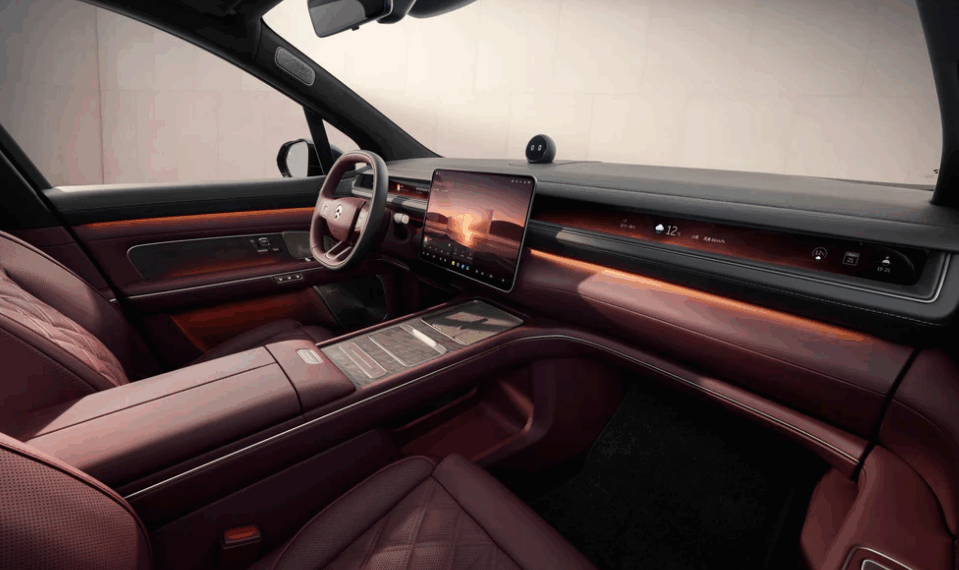
Boréas Technologies, a leader in piezo-based haptic technology for automotive, mobile, and consumer applications, announced that its advanced automotive haptic module has been integrated into the TUI Bar touch interface of NIO’s all-new ES8 SUV. This expansion extends Boréas’ industry-leading haptic experience from the NIO ET9 to NIO’s flagship SUV, bringing highly responsive tactile feedback to a broader segment of premium electric vehicle customers.
The all-new ES8, launched in September 2025, achieved 10,000 deliveries in just 41 days, prompting NIO to increase production capacity by 70% to meet strong demand. The rapid adoption underscores consumer recognition of the enhanced user experience enabled by advanced haptic technology.
“The all-new ES8’s TUI Bar touch area continues NIO’s commitment to benchmark user interface design,” said Felix Wu, Head of Digital Space Experience Team & Experience Manager at NIO. “Enabled by Boréas’ automotive haptic module, it’s an ultra-responsive, richly textured platform that enhances the overall feeling of luxury for drivers.”
Unlike older linear resonant actuator (LRA) technologies, which can produce a less defined tactile response, Boréas’ piezo haptic module delivers crisp and reassuring touch feedback, quickly confirming driver-selected functions while minimizing the need to look at the screen. Wu added that the TUI Bar’s precise feedback significantly contributes to safer driving by allowing drivers to maintain focus on the road.
“By integrating Boréas’ haptic module into the ES8’s TUI Bar, NIO is enhancing both safety and luxury in its flagship SUV,” said Simon Chaput, President and Founder of Boréas Technologies. “Drivers and passengers experience tactile confirmation that is realistic and consistent, reinforcing the premium automotive experience.”
The ES8’s TUI Bar features a three-zone interface: left and right zones control the driver and passenger Skyline screens, while the central zone interacts with the ICS central control screen. The system supports multi-finger gestures, enabling functions like volume adjustment, media selection, and track navigation with one-, two-, or three-finger taps.