


Asahi Kasei Microdevices (AKM) and Aizip have partnered to introduce new AI-enhanced sensing solutions that combine advanced sensor hardware with lightweight, on-device artificial intelligence. The companies announced the collaboration on December 17, 2025, highlighting two demonstration technologies focused on real-time swallowing detection using millimeter-wave radar and gesture recognition based on electromyography (EMG). Both solutions will be showcased at CES 2026 in the Digital Health section of the Venetian Expo.
The collaboration brings together AKM’s sensing technologies with Aizip’s compact AI models, aiming to help manufacturers integrate intelligent sensing capabilities without requiring deep in-house AI expertise. By enabling data processing directly on the device, the solutions are designed to deliver real-time insights while minimizing latency, power consumption, and reliance on cloud connectivity.
One of the key demonstrations focuses on real-time swallowing monitoring using millimeter-wave radar. The solution addresses the challenge of detecting aspiration, a condition in which food or liquid enters the airway and can lead to serious health complications, particularly among older adults. According to the American Thoracic Society, aspiration pneumonia resulted in nearly 186,000 deaths in the United States between 1999 and 2022, with people aged 75 and older accounting for the majority of cases.
AKM’s millimeter-wave radar module monitors subtle throat movements without requiring a wearable device. The radar signals are converted into audio data, which is then analyzed locally by Aizip’s AI models in real time. The system is designed to differentiate swallowing from other throat motions and body movements, providing actionable insights into potential aspiration risks during everyday activities such as eating.
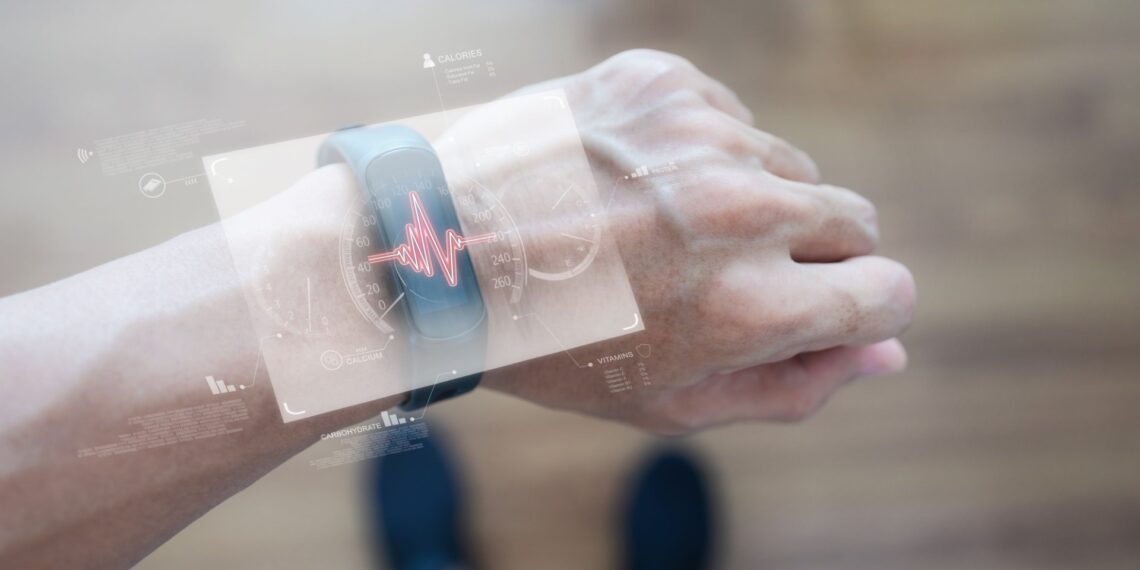
The second demonstration highlights a gesture recognition platform built around AKM’s AK05611 analog front-end integrated circuit. The compact IC combines amplifiers, analog-to-digital converters, and integrated motion artifact cancellation in a small footprint. In the demonstration setup, the AK05611 is embedded in a wristband that captures EMG signals generated by forearm muscle movements. Aizip’s AI models interpret these signals to identify gestures such as opening and closing the hand or performing a single tap.
This approach could enable touchless interaction with electronic devices, allowing users to trigger alerts or control functions without using a screen. Such capabilities may be particularly relevant for wearable devices in healthcare and assisted living applications.
According to the companies, processing sensor data locally offers multiple advantages, including faster response times, improved privacy, and lower power requirements. The collaboration underscores a broader trend toward edge AI, where intelligence is embedded directly into sensing hardware.
While the initial focus is on digital health and wearable applications, AKM and Aizip note that the underlying technologies could extend to other sectors, including industrial systems, smart home devices, and human-machine interfaces.