

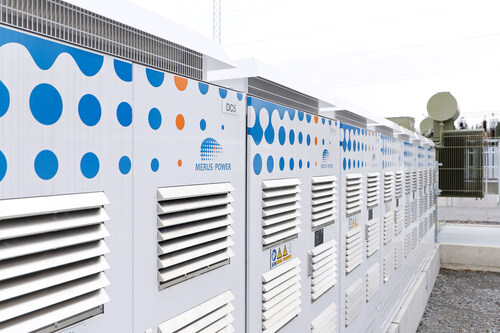
Merus Power has brought online the first grid-forming (GFM) battery energy storage system (BESS) in the Nordic region, delivering a 30 MW / 36 MWh facility for Swiss energy company Alpiq. The project, located in Valkeakoski, Finland, meets the grid-forming requirements set by Fingrid, the country’s transmission system operator (TSO), and marks a significant milestone for the integration of renewable energy in the Nordic power market.
The system, verified through simulations and rigorous field tests, is designed to independently support the grid during disturbances, maintaining voltage and frequency without relying on existing infrastructure. This functionality differentiates grid-forming solutions from traditional grid-following energy storage systems, enabling the BESS to stabilize the network, enhance grid stiffness, and support recovery after blackouts.
“Merus Power is proud to be the first in the Nordics to bring online a grid-forming battery energy storage system,” said Kari Tuomala, CEO of Merus Power. “This achievement demonstrates Finnish product development expertise and our ability to respond reliably to the evolving requirements of the green transition. Security of supply and cybersecurity remain central to our operations, as energy storage systems are critical infrastructure.”
Fingrid CEO Asta Sihvonen-Punkka called the project “an important step towards an even cleaner and more flexible electricity system,” noting that such technological innovations are essential for the reliable operation of the grid and the continued growth of renewable energy sources.
The Valkeakoski facility carries historical significance. Fingrid published its first requirements for grid-forming functionality for type D and C energy storage only in mid-2023. Merus Power developed and commercialized the technology within two years, demonstrating its ability to meet strict verification standards, including extensive modeling and demanding field tests.
Unlike conventional grid-following systems, which depend on the stability of an existing grid, grid-forming BESS can establish and maintain voltage and frequency independently. This capability allows energy storage systems to serve as a foundational element for grid stability, particularly in areas with high penetration of renewable generation, such as wind and solar power. As more intermittent energy sources come online, grid-forming solutions become critical to sustaining reliable electricity delivery.
Merus Power acted as developer, supplier, and EPC (Engineering, Procurement, and Construction) contractor for the project, overseeing all stages from permitting and design to manufacturing, delivery, and commissioning. The company’s energy storage solutions are based on fully in-house developed technology, including power electronics and grid connection software. Cybersecurity and reliability are core components of the system, reflecting its role as part of critical infrastructure.
For Alpiq, this marks its first grid-forming energy storage system and strengthens the Swiss company’s position as a provider of flexible energy solutions in Europe. “This is a major milestone for us and an excellent example of how collaboration and innovation can accelerate the green transition,” said Lukas Gresnigt, Head of International and member of the Alpiq Executive Board. “Despite the demanding development process, the system was delivered ahead of schedule, reflecting the strong commitment of everyone involved.”
Merus Power said the Valkeakoski project reinforces its position as a leading energy storage provider in the Nordics and highlights the growing role of BESS in stabilizing power systems while enabling greater integration of renewables. The facility’s 30 MW capacity and 36 MWh energy storage allow it to provide rapid response during grid disturbances, ensuring uninterrupted power supply and supporting the region’s transition to a cleaner energy system.
The commissioning of the first grid-forming battery system in the Nordics is expected to influence future energy projects, as regulators and utilities increasingly require advanced energy storage solutions capable of maintaining grid stability independently.