

The U.S. Department of Energy (DOE) and Argonne National Laboratory have announced a major public-private initiative with NVIDIA and Oracle to build the DOE’s largest artificial intelligence (AI) supercomputing systems, marking a significant expansion of the nation’s AI and scientific computing capabilities. The collaboration is expected to accelerate discoveries in energy, security, and scientific research while reinforcing America’s position as a global leader in AI-driven innovation.
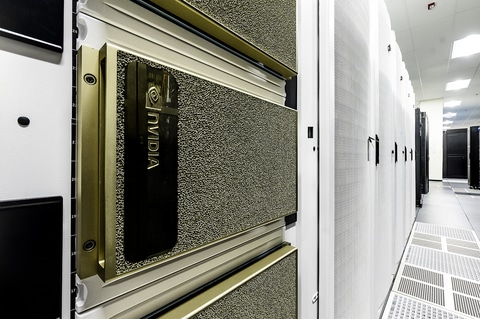
The partnership will see the construction of two next-generation AI supercomputers, Solstice and Equinox, at Argonne National Laboratory. Solstice will be equipped with 100,000 NVIDIA Blackwell GPUs, making it the largest AI supercomputer across the DOE’s laboratory complex. Equinox, featuring 10,000 NVIDIA Blackwell GPUs, will begin construction immediately and is scheduled for delivery in 2026. These systems will be connected to DOE’s nationwide network of laboratories, scientific instruments, and data assets, enabling researchers to address some of the country’s most complex challenges in real time.
As part of the agreement, Oracle will provide the DOE with immediate access to advanced AI computing resources based on a combination of NVIDIA Hopper and Blackwell architectures. This access will allow scientists at Argonne and across the United States to begin developing and training large-scale AI models even before the completion of the new supercomputers. The initiative follows President Trump’s Executive Order to accelerate the permitting of federal data center infrastructure, ensuring that high-performance computing resources are deployed faster and more efficiently.
U.S. Secretary of Energy Chris Wright called the collaboration a “commonsense approach to computing partnerships” that will strengthen America’s leadership in AI and scientific research. “Winning the AI race requires new and creative partnerships that bring together the brightest minds and industries American technology and science have to offer,” Wright said. “These systems will be a powerhouse for scientific and technological innovation. Thanks to President Trump, we’re bringing new computing capacity online faster than ever before and turning shared innovation into national strength.”
NVIDIA founder and CEO Jensen Huang described the initiative as a critical step toward building “an AI factory that will serve as America’s engine for discovery.” He said the collaboration with DOE and Oracle would give scientists unprecedented access to advanced AI infrastructure capable of driving progress in healthcare, materials research, and energy systems. “AI is the most powerful technology of our time, and science is its greatest frontier,” Huang said.
Oracle CEO Clay Magouyrk emphasized that the partnership would deliver sovereign, high-performance AI capabilities to support the nation’s most urgent scientific challenges. “Our collaboration at Argonne, tapping into the power of OCI, will provide a critical resource to accelerate the next wave of scientific breakthroughs,” Magouyrk said.
According to Paul Kearns, director of Argonne National Laboratory, the Equinox and Solstice systems will be designed to accelerate scientific AI workflows and prepare thousands of researchers to use the systems’ groundbreaking capabilities. “These systems will seamlessly connect to forefront DOE experimental facilities such as our Advanced Photon Source, allowing scientists to address some of the nation’s most pressing challenges through scientific discovery,” Kearns said.
The Equinox and Solstice platforms will enable scientists to develop and train frontier AI models using NVIDIA Megatron-Core and scale them with the NVIDIA TensorRT inference software stack. These models are expected to form the foundation of next-generation “agentic AI” workflows that combine reasoning, simulation, and predictive analytics for open science.
In addition to the DOE’s collaboration with NVIDIA and Oracle, Argonne is also deploying three new AI systems—Minerva, Janus, and Tara—through its partnerships with NVIDIA, Hewlett Packard Enterprise (HPE), and World Wide Technology (WWT). These systems are focused on AI inference, the process of using trained models to generate insights from new data, and on training the next generation of AI and high-performance computing (HPC) professionals.
Rick Stevens, Argonne’s associate laboratory director for Computing, Environment and Life Sciences, said the expansion would fundamentally change how scientific research is conducted. “Modern science isn’t just about having powerful computers anymore—it’s about having powerful AI capabilities,” he said. “Inference allows us to streamline how we test hypotheses, design experiments, and gain insights from large, complex datasets.”
Dion Harris, senior director of HPC, Cloud, and AI Infrastructure at NVIDIA, noted that the new systems will give U.S. researchers the computational power to “push the frontiers of discovery” across every scientific field. HPE’s senior vice president Trish Damkroger said the collaboration would strengthen the nation’s leadership in science and engineering by “delivering some of the world’s most powerful infrastructure based on cutting-edge computing technologies.” Scot Gagnon, vice president of Federal at WWT, added that Minerva will provide “broad access to advanced AI capabilities that will drive discoveries.”
All five systems—Solstice, Equinox, Minerva, Janus, and Tara—are designed to dramatically reduce the time it takes for researchers to move from idea to discovery. By bringing together DOE’s scientific expertise with private-sector innovations in frontier AI computing, the collaboration establishes a new model for how the government and industry can jointly accelerate scientific progress.
When complete, the initiative will represent one of the most ambitious expansions of AI computing capacity in the United States, transforming how scientific research is performed and reinforcing the country’s technological leadership. As Secretary Wright summarized, “This collaboration is about speed, scale, and scientific sovereignty. Together, we’re ensuring that America’s AI future is built on innovation, strength, and shared purpose.”