


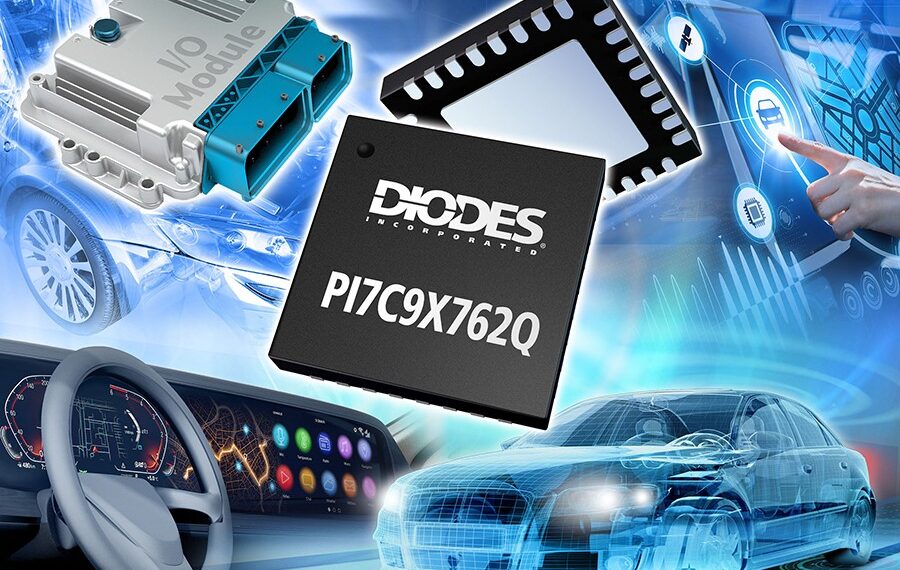
Diodes Incorporated (Nasdaq: DIOD) has introduced the PI7C9X762Q, a high-performance, automotive-compliant I2C/SPI-to-dual-channel UART bridge designed to improve data connectivity and reliability in next-generation vehicles.
Engineered for low power consumption in both active and sleep modes, the device targets electric vehicles (EVs) and a range of automotive applications, including smart cockpits, central controllers, ADAS systems, telematics, and zonal gateways.
The PI7C9X762Q provides full bi-directional protocol conversion and supports SPI clock speeds up to 33 Mbps. Each UART channel includes 64-byte TX/RX FIFOs with programmable trigger levels and flexible character formatting options—ranging from 5- to 8-bit characters and multiple parity and stop-bit configurations. Its internal register set maintains backward compatibility with existing UARTs, simplifying software migration and system integration.
Compactly housed in a 32-contact, 5mm x 5mm TQFN package, the device integrates up to eight programmable GPIO pins, offering additional design flexibility. Advanced features include auto-hardware and software flow control, fractional baud rate support, and a software reset function for independent system management.
Diodes said the new bridge aims to deliver a stable, scalable, and cost-efficient solution for robust automotive and industrial interconnectivity. The PI7C9X762Q is priced at $3.68 in 1,000-piece quantities, while the PI7C9X762, a standard version for industrial and commercial use, is also available.