


The French Alternative Energies and Atomic Energy Commission (CEA) and Taiwan-based ProLogium Technology have announced a technical partnership to develop solid-state battery modules designed for easier disassembly and recycling. The collaboration reflects wider European efforts to enhance battery autonomy and sustainability.
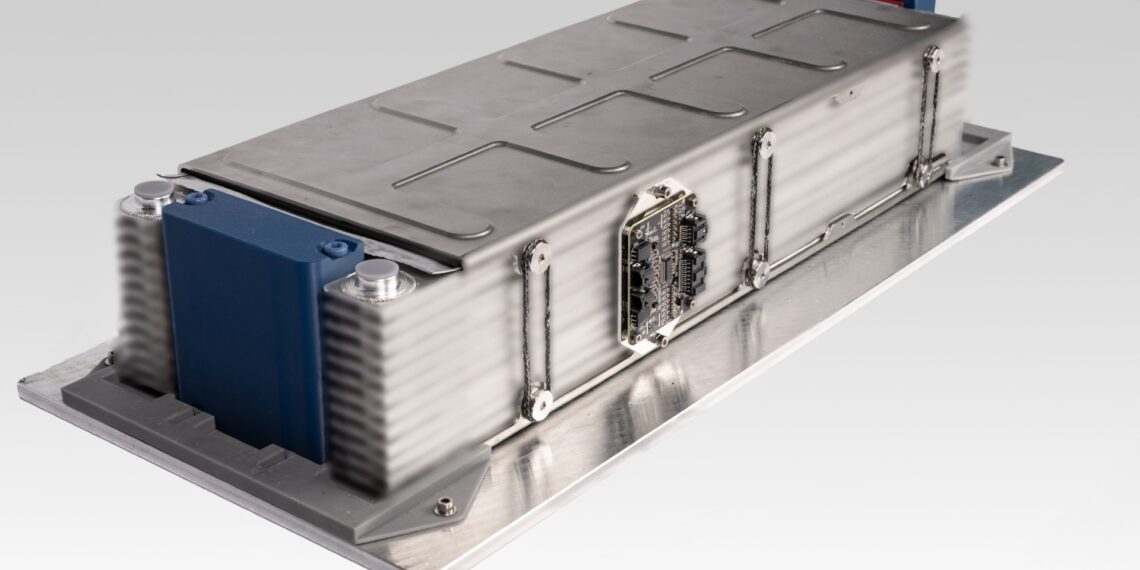
The joint initiative, launched in November 2024, is focused on creating a battery module with a “Design-for-Disassembly” structure. This design is intended to balance high energy density with sustainability objectives such as reparability, recyclability, and reusability. A prototype for automotive use will be presented at IAA Mobility 2025 in Munich between September 9 and 11.
Conventional lithium-ion batteries have increasingly moved toward compact pack designs such as Cell-to-Pack (CTP) and Cell-to-Chassis (CTC) to maximize energy density. However, these formats often reduce safety margins and make repair and recycling more difficult. A failure in one cell can result in the scrapping of an entire module.
Repairable alternatives typically reduce energy density because they require more structural space. The collaboration between CEA and ProLogium aims to mitigate this compromise by using high-density solid-state lithium ceramic cells combined with advanced modular design. The result is an architecture that allows for individual cells to be replaced or recovered without dismantling the entire pack.
The prototype uses non-welded designs that enable easier separation of components at the end of their lifecycle. This structure allows modules to be removed from the pack, cells to be accessed directly, and materials to be recycled more efficiently. The partners describe this as a step toward applying circular economy principles to large-scale battery production and usage.
According to the developers, the system has potential benefits including reduced electronic waste, shorter repair times, and lower lifecycle costs. It also addresses concerns around sustainable battery lifecycle management, a priority area for the European Union as it seeks to strengthen its regional supply chains.
The partnership supports France and Europe’s broader objectives in the energy transition, including industrial autonomy and carbon reduction targets. It also reflects efforts to secure technological leadership in solid-state battery research and manufacturing at a time when competition is increasing globally.
ProLogium, founded in 2006, specializes in solid-state lithium ceramic batteries. The company has secured over a thousand patents and operates a gigafactory in Taiwan, which began production in 2024. In Europe, ProLogium opened an R&D center at Paris-Saclay in 2024 and is preparing to construct a gigafactory in Dunkirk, with operations expected to start in 2028 and full production capacity targeted for 2030.
CEA contributes expertise in module design, prototyping, and testing. As a public research organization, it plays a role in supporting French and European industry across energy, digital, health, and security transitions.
The upcoming presentation of the prototype at IAA Mobility 2025 is expected to highlight the role of joint industrial and research partnerships in advancing sustainable battery technology.