


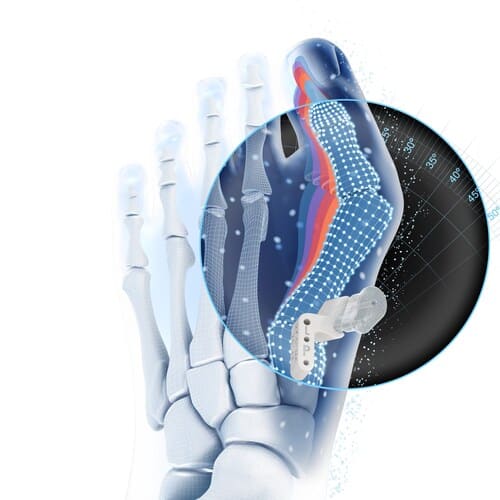
Johnson & Johnson MedTech, a unit of Johnson & Johnson (NYSE: JNJ), on Wednesday announced the U.S. launch of VIRTUGUIDE, an AI-powered surgical system designed to support Lapidus procedures, a common method for correcting severe bunion deformities.
Bunions affect nearly one in three adults in the United States, often leading to pain and reduced mobility. The Lapidus procedure, which involves joining the first metatarsal and the medial cuneiform bones near the foot’s arch, is a recognized treatment option but is considered technically demanding.
The VIRTUGUIDE System aims to reduce surgical complexity by offering pre-operative planning tools that use artificial intelligence to analyze each patient’s anatomy and recommend personalized correction plans. The technology was developed in collaboration with medical software firm PeekMed.
According to Johnson & Johnson, early clinical users of VIRTUGUIDE reported time savings of at least 30 minutes per procedure, compared to traditional methods. The system also allows for precise instrumentation tailored to the patient, potentially improving accuracy and reducing variability in outcomes.
“The ability to match pre-operative plans with intraoperative execution has changed how I approach bunion surgery,” said Dr. Michael Campbell, a board-certified orthopaedic surgeon and early adopter of the technology. “It improves efficiency and enhances patient confidence.”
The launch follows 510(k) clearance granted earlier this year by the U.S. Food and Drug Administration (FDA) for the system’s pre-operative planning software.
Oray Boston, Worldwide President of Trauma, Extremities, Craniomaxillofacial and Sports Medicine at Johnson & Johnson MedTech, called the VIRTUGUIDE launch a “pivotal advancement” and part of the company’s broader push to integrate enabling technologies like its VELYS platform across orthopaedic care.