


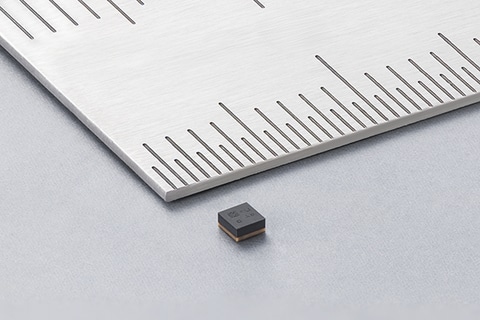
Murata Manufacturing Co., Ltd. (TOKYO: 6981) has begun mass production and commercial shipments of the world’s first high-frequency filter built using XBAR technology, marking a milestone in wireless communication component design. The innovation is aimed at enabling clearer signal reception and stronger performance across advanced wireless technologies, including 5G, Wi-Fi 6E, Wi-Fi 7, and emerging 6G systems.
Developed in collaboration with Resonant Inc., Murata’s U.S.-based subsidiary, the new filter integrates proprietary Surface Acoustic Wave (SAW) expertise with XBAR technology to meet growing demands for high-speed, high-capacity data transmission. As Wi-Fi and cellular networks expand into higher frequency bands, the need for high-performance filters capable of addressing out-of-band interference, signal clarity, and power efficiency is becoming critical.
Traditional filter technologies—such as Low Temperature Co-Fired Ceramic (LTCC) and standard Bulk Acoustic Wave (BAW) filters—have struggled to meet the bandwidth and insertion loss requirements needed in today’s devices. Murata’s XBAR-based filter addresses these limitations by achieving low insertion loss, wide bandwidth, and high attenuation, even at frequencies above 3 GHz.
The filter uses comb-shaped electrodes and a piezoelectric single-crystal thin film to excite bulk acoustic waves in a novel configuration, enabling strong attenuation performance across multiple interference bands. Key technical metrics include a passband of 5150–7125 MHz, typical insertion loss of 2.2 dB, and return loss of 17 dB. It also delivers attenuation levels up to 28 dB in adjacent frequency ranges, helping eliminate unwanted signals.
Murata is targeting the new filter for use in mobile and connected devices, including smartphones, wearables, laptops, and communication gateways—where space efficiency and power performance are paramount. The company plans to further evolve the XBAR platform to support future network architectures operating above 10 GHz, in preparation for the rollout of 6G technologies.